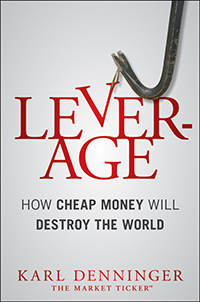
I like to feed the python that is lovingly curled around my neck. It's not a problem that it keeps getting bigger, right?
Chairman Ben S. Bernanke
The Economic Outlook
Before the Joint Economic Committee, U.S. Congress, Washington, D.C.
May 22, 2013
Chairman Brady, Vice Chair Klobuchar, and other members of the Committee, I appreciate this opportunity to discuss the economic outlook and economic policy.Current Economic Conditions
Economic growth has continued at a moderate pace so far this year. Real gross domestic product (GDP) is estimated to have risen at an annual rate of 2-1/2 percent in the first quarter after increasing 1-3/4 percent during 2012. Economic growth in the first quarter was supported by continued expansion in demand by U.S. households and businesses, which more than offset the drag from declines in government spending, especially defense spending.
So what was the growth rate in the real economy, subtracting back out your monetary debasement? Oh wait -- it wasn't a "growth" rate at all, was it?
Conditions in the job market have shown some improvement recently. The unemployment rate, at 7.5 percent in April, has declined more than 1/2 percentage point since last summer. Moreover, gains in total nonfarm payroll employment have averaged more than 200,000 jobs per month over the past six months, compared with average monthly gains of less than 140,000 during the prior six months. In all, payroll employment has now expanded by about 6 million jobs since its low point, and the unemployment rate has fallen 2-1/2 percentage points since its peak.
Uh huh.
Despite this improvement, the job market remains weak overall: The unemployment rate is still well above its longer-run normal level, rates of long-term unemployment are historically high, and the labor force participation rate has continued to move down. Moreover, nearly 8 million people are working part time even though they would prefer full-time work. High rates of unemployment and underemployment are extraordinarily costly: Not only do they impose hardships on the affected individuals and their families, they also damage the productive potential of the economy as a whole by eroding workers' skills and--particularly relevant during this commencement season--by preventing many young people from gaining workplace skills and experience in the first place. The loss of output and earnings associated with high unemployment also reduces government revenues and increases spending on income-support programs, thereby leading to larger budget deficits and higher levels of public debt than would otherwise occur.
Once again....
Consumer price inflation has been low. The price index for personal consumption expenditures rose only 1 percent over the 12 months ending in March, down from about 2-1/4 percent during the previous 12 months. This slow rate of inflation partly reflects recent declines in consumer energy prices, but price inflation for other consumer goods and services has also been subdued. Nevertheless, measures of longer-term inflation expectations have remained stable and continue to run in the narrow ranges seen over the past several years. Over the next few years, inflation appears likely to run at or below the 2 percent rate that the Federal Open Market Committee (FOMC) judges to be most consistent with the Federal Reserve's statutory mandate to foster maximum employment and stable prices.
Consumer price inflation has been low? Well, I suppose maybe it is if you exclude things that are non-discretionary such as food, medical insurance (now mandatory under Obamacare) and similar. But if you do include those things the actual cost of living -- that is, what you must spend just to live -- has gone up a lot in the last five years.
That is definitely not "low."
Over the nearly four years since the recovery began, the economy has been held back by a number of headwinds. Some of these headwinds have begun to dissipate recently, in part because of the Federal Reserve's highly accommodative monetary policy. Notably, the housing market has strengthened over the past year, supported by low mortgage rates and improved sentiment on the part of potential buyers. Increased housing activity is fostering job creation in construction and related industries, such as real estate brokerage and home furnishings, while higher home prices are bolstering household finances, which helps support the growth of private consumption.
The "headwinds" are caused by The Fed through its QE games. This has destroyed consumer purchasing power for the very necessities that form non-discretionary purchases.
Severe fiscal and financial strains in Europe, by weighing on U.S. exports and financial markets, have also restrained U.S. economic growth over the past couple of years. However, since last summer, financial conditions in the euro area have improved somewhat, which should help mitigate the economic slowdown there while also reducing the headwinds faced by the U.S. economy. Also, credit conditions in the United States have eased for some types of loans, as bank capital and asset quality have strengthened.
Fiscal Policy
Fiscal policy, at all levels of government, has been and continues to be an important determinant of the pace of economic growth. Federal fiscal policy, taking into account both discretionary actions and so-called automatic stabilizers, was, on net, quite expansionary during the recession and early in the recovery. However, a substantial part of this impetus was offset by spending cuts and tax increases by state and local governments, most of which are subject to balanced-budget requirements, and by subsequent fiscal tightening at the federal level. Notably, over the past four years, state and local governments have cut civilian government employment by roughly 700,000 jobs, and total government employment has fallen by more than 800,000 jobs over the same period. For comparison, over the four years following the trough of the 2001 recession, total government employment rose by more than 500,000 jobs.Most recently, the strengthening economy has improved the budgetary outlooks of most state and local governments, leading them to reduce their pace of fiscal tightening. At the same time, though, fiscal policy at the federal level has become significantly more restrictive. In particular, the expiration of the payroll tax cut, the enactment of tax increases, the effects of the budget caps on discretionary spending, the onset of the sequestration, and the declines in defense spending for overseas military operations are expected, collectively, to exert a substantial drag on the economy this year. The Congressional Budget Office (CBO) estimates that the deficit reduction policies in current law will slow the pace of real GDP growth by about 1-1/2 percentage points during 2013, relative to what it would have been otherwise.1 In present circumstances, with short-term interest rates already close to zero, monetary policy does not have the capacity to fully offset an economic headwind of this magnitude.
Expansionary? Excuse me? Government at all levels cannot "expand" the economy as it has to get the funds from somewhere. There are only two choices: Tax people (taking their discretionary income) or debase through issuance of debt, whether taken up by the Fed or not (which also takes the people's discretionary purchasing power.)
Government, especially entitlements and welfare, do not expand the economy. That comes from innovation in the private sector. All government does is steal from the private sector and redistribute those funds.
Now some amount of this is agreeable to virtually everyone. Nearly all want a strong common defense, for example, although we might argue somewhat over exactly how we should deploy that defense. Most want roads. Most want a police force of some composition and most people also would like a jail system for those who initiate violence against others as the alternative is for society to degenerate into a "Hatfield and McCoy" sort of tit-for-tat shooting gallery.
But government entitlement programs, including food stamps, welfare, Medicare, Medicaid and similar do not expand the economy. They shift the economy from investment and innovation into simple consumption spending and worse, they directly and indirectly promote dependency instead of innovation among the population.
Although near-term fiscal restraint has increased, much less has been done to address the federal government's longer-term fiscal imbalances. Indeed, the CBO projects that, under current policies, the federal deficit and debt as a percentage of GDP will begin rising again in the latter part of this decade and move sharply upward thereafter, in large part reflecting the aging of our society and projected increases in health-care costs, along with mounting debt service payments. To promote economic growth and stability in the longer term, it will be essential for fiscal policymakers to put the federal budget on a sustainable long-run path. Importantly, the objectives of effectively addressing longer-term fiscal imbalances and of minimizing the near-term fiscal headwinds facing the economic recovery are not incompatible. To achieve both goals simultaneously, the Congress and the Administration could consider replacing some of the near-term fiscal restraint now in law with policies that reduce the federal deficit more gradually in the near term but more substantially in the longer run.
That is simply not going to happen so long as The Fed continues to encourage huge deficits and outrageous entitlement spending. That in turn shifts capital from those who would invest, innovate and produce to pure consumption spending by those sitting on their ass. This pattern will not change until The Fed stops promoting non-productive consumption.
Period.
Monetary Policy
With unemployment well above normal levels and inflation subdued, fostering our congressionally mandated objectives of maximum employment and price stability requires a highly accommodative monetary policy. Normally, the Committee would provide policy accommodation by reducing its target for the federal funds rate, thus putting downward pressure on interest rates generally. However, the federal funds rate and other short-term money market rates have been close to zero since late 2008, so the Committee has had to use other policy tools.
But it hasn't worked Ben. So now what? More of what has failed?
The first of these alternative tools is "forward guidance" about the FOMC's likely future target for the federal funds rate. Since December, the Committee's postmeeting statement has indicated that its current target range for the federal funds rate, 0 to 1/4 percent, will be appropriate "at least as long as the unemployment rate remains above 6-1/2 percent, inflation between one and two years ahead is projected to be no more than a half percentage point above the Committee's 2 percent longer-run goal, and longer-term inflation expectations continue to be well anchored." This guidance underscores the Committee's intention to maintain highly accommodative monetary policy as long as needed to support continued progress toward maximum employment and price stability.
The second policy tool now in use is large-scale purchases of longer-term Treasury securities and agency mortgage-backed securities (MBS). These purchases put downward pressure on longer-term interest rates, including mortgage rates. For some months, the FOMC has been buying longer-term Treasury securities at a pace of $45 billion per month and agency MBS at a pace of $40 billion per month. The Committee has said that it will continue its securities purchases until the outlook for the labor market has improved substantially in a context of price stability. The Committee also has stated that in determining the size, pace, and composition of its asset purchases, it will take appropriate account of the likely efficacy and costs of such purchases as well as the extent of progress toward its economic objectives.
This doesn't work either. Presuming that the "reasonable" rate for 30 year money is 6% (which is likely at the low end) yet today's 30 year mortgage is 3.5%, today's P&I on a 30 year mortgage for a $200,000 loan is $895.48.
That same payment, at the non-distorted price of money, only buys $150,104.94 worth of house!
This is an intentional inflation of asset prices well above the natural clearing price. While this distortion can be maintained for quite some time, the fact that it exists is irrefutable.
This is how crashes happen -- not natural forces but intentional distortions, whether through government policy or outright fraud by private actors through intentional misrepresentation.
At its most recent meeting, the Committee made clear that it is prepared to increase or reduce the pace of its asset purchases to ensure that the stance of monetary policy remains appropriate as the outlook for the labor market or inflation changes. Accordingly, in considering whether a recalibration of the pace of its purchases is warranted, the Committee will continue to assess the degree of progress made toward its objectives in light of incoming information. The Committee also reiterated, consistent with its forward guidance regarding the federal funds rate, that it expects a highly accommodative stance of monetary policy to remain appropriate for a considerable time after the asset purchase program ends and the economic recovery strengthens.
In the current economic environment, monetary policy is providing significant benefits. Low real interest rates have helped support spending on durable goods, such as automobiles, and also contributed significantly to the recovery in housing sales, construction, and prices. Higher prices of houses and other assets, in turn, have increased household wealth and consumer confidence, spurring consumer spending and contributing to gains in production and employment. Importantly, accommodative monetary policy has also helped to offset incipient deflationary pressures and kept inflation from falling even further below the Committee's 2 percent longer-run objective.
See above. Price is not necessarily value. Price is just price. When you promote distortions in price on purpose with the intent of sending false market signals due to the impact of compounding that is always present wherever there is a growth "rate", that is, an exponential function, by definition you are making the ultimate correction back to value worse.
The Fed is intentionally creating a bubble that will crash. It is only a matter of when, not if, such a consequence will occur.
That said, the Committee is aware that a long period of low interest rates has costs and risks. For example, even as low interest rates have helped create jobs and supported the prices of homes and other assets, savers who rely on interest income from savings accounts or government bonds are receiving very low returns. Another cost, one that we take very seriously, is the possibility that very low interest rates, if maintained too long, could undermine financial stability. For example, investors or portfolio managers dissatisfied with low returns may "reach for yield" by taking on more credit risk, duration risk, or leverage. The Federal Reserve is working to address financial stability concerns through increased monitoring, a more systemic approach to supervising financial firms, and the ongoing implementation of reforms to make the financial system more resilient.
See above. Your "$200,000" house is not worth that as maintenance of that price requires indefinite maintenance of below-market interest rates. Since the latter is impossible without complete destruction of the currency what Bernanke has provided is an intentional false price in the markets, both in housing and other assets.
Intentional manipulation of markets is usually thought of as a crime, not a benefit, and should lead to indictments, not praise.
Recognizing the drawbacks of persistently low rates, the FOMC actively seeks economic conditions consistent with sustainably higher interest rates. Unfortunately, withdrawing policy accommodation at this juncture would be highly unlikely to produce such conditions. A premature tightening of monetary policy could lead interest rates to rise temporarily but would also carry a substantial risk of slowing or ending the economic recovery and causing inflation to fall further. Such outcomes tend to be associated with extended periods of lower, not higher, interest rates, as well as poor returns on other assets. Moreover, renewed economic weakness would pose its own risks to financial stability.
Said current price is false.
Because only a healthy economy can deliver sustainably high real rates of return to savers and investors, the best way to achieve higher returns in the medium term and beyond is for the Federal Reserve--consistent with its congressional mandate--to provide policy accommodation as needed to foster maximum employment and price stability. Of course, we will do so with due regard for the efficacy and costs of our policy actions and in a way that is responsive to the evolution of the economic outlook.
A healthy economy can only come about when the cost of borrowing accurately reflects the risk and reward of lending actual capital (not ethereal hot air) into the market for whatever purpose and at whatever credit profit the borrower and lender negotiate.
Such an environment has not existed since the first circumvention of Glass-Steagall. Willful and intentional distortion of asset prices and markets by The Fed and Congress, both acting in concert, have now led to three serial bubbles that have decimated economic conditions for the common American.
Release Date: May 1, 2013
For immediate release
Information received since the Federal Open Market Committee met in March suggests that economic activity has been expanding at a moderate pace. Labor market conditions have shown some improvement in recent months, on balance, but the unemployment rate remains elevated. Household spending and business fixed investment advanced, and the housing sector has strengthened further, but fiscal policy is restraining economic growth. Inflation has been running somewhat below the Committee's longer-run objective, apart from temporary variations that largely reflect fluctuations in energy prices. Longer-term inflation expectations have remained stable.
"Fiscal policy" constituting a near-trillion dollar budget deficit is "restraining" economic growth?! 
Consistent with its statutory mandate, the Committee seeks to foster maximum employment and price stability. The Committee expects that, with appropriate policy accommodation, economic growth will proceed at a moderate pace and the unemployment rate will gradually decline toward levels the Committee judges consistent with its dual mandate. The Committee continues to see downside risks to the economic outlook. The Committee also anticipates that inflation over the medium term likely will run at or below its 2 percent objective.
Scream louder. It'll work. Really.
To support a stronger economic recovery and to help ensure that inflation, over time, is at the rate most consistent with its dual mandate, the Committee decided to continue purchasing additional agency mortgage-backed securities at a pace of $40 billion per month and longer-term Treasury securities at a pace of $45 billion per month. The Committee is maintaining its existing policy of reinvesting principal payments from its holdings of agency debt and agency mortgage-backed securities in agency mortgage-backed securities and of rolling over maturing Treasury securities at auction. Taken together, these actions should maintain downward pressure on longer-term interest rates, support mortgage markets, and help to make broader financial conditions more accommodative.
Four years of non-working policy so we must continue it.
The Committee will closely monitor incoming information on economic and financial developments in coming months. The Committee will continue its purchases of Treasury and agency mortgage-backed securities, and employ its other policy tools as appropriate, until the outlook for the labor market has improved substantially in a context of price stability. The Committee is prepared to increase or reduce the pace of its purchases to maintain appropriate policy accommodation as the outlook for the labor market or inflation changes. In determining the size, pace, and composition of its asset purchases, the Committee will continue to take appropriate account of the likely efficacy and costs of such purchases as well as the extent of progress toward its economic objectives.
We know nothing but stupid. The more we fail the more we will do and fail harder and more.
To support continued progress toward maximum employment and price stability, the Committee expects that a highly accommodative stance of monetary policy will remain appropriate for a considerable time after the asset purchase program ends and the economic recovery strengthens. In particular, the Committee decided to keep the target range for the federal funds rate at 0 to 1/4 percent and currently anticipates that this exceptionally low range for the federal funds rate will be appropriate at least as long as the unemployment rate remains above 6-1/2 percent, inflation between one and two years ahead is projected to be no more than a half percentage point above the Committee's 2 percent longer-run goal, and longer-term inflation expectations continue to be well anchored. In determining how long to maintain a highly accommodative stance of monetary policy, the Committee will also consider other information, including additional measures of labor market conditions, indicators of inflation pressures and inflation expectations, and readings on financial developments. When the Committee decides to begin to remove policy accommodation, it will take a balanced approach consistent with its longer-run goals of maximum employment and inflation of 2 percent.
Uh huh. A trillion dollars of purchases per year and nothing is happening.
What was that about an exit again?
Voting for the FOMC monetary policy action were: Ben S. Bernanke, Chairman; William C. Dudley, Vice Chairman; James Bullard; Elizabeth A. Duke; Charles L. Evans; Jerome H. Powell; Sarah Bloom Raskin; Eric S. Rosengren; Jeremy C. Stein; Daniel K. Tarullo; and Janet L. Yellen. Voting against the action was Esther L. George, who was concerned that the continued high level of monetary accommodation increased the risks of future economic and financial imbalances and, over time, could cause an increase in long-term inflation expectations.
When the people have had enough Esther George might escape prosecution.
Maybe.
What a message to wake up to this morning....
The European Union intensified its campaign against U.S. Federal Reserve proposals to toughen oversight of bank units belonging to overseas lenders, warning of “potential retaliation” against the plans because they will drive up costs.
Heh Barnier, here's my answer: 
What Europe doesn't like is The Fed's intent to force foreign banks to set up holding companies under US Law domiciled here to contain their US operations. But this isn't just a good idea, it's actually required under our Constitution!
Specifically, Article 1 Section 8:
The Congress shall have the power.....
To establish an uniform Rule of Naturalization, and uniform Laws on the subject of Bankruptcies throughout the United States;
If Europe doesn't like this that's just tough crap; foreign banks don't have to do business here!
The problem that Europe has, and what is driving the complaints, is the fact that European banks have ridiculous leverage ratios which have not been taken down and in addition they are holding so-called "assets" at impossible-to-validate valuations. It's bad enough here, but it's far worse "over there" and this disparity has been exacerbated by the lawless behavior of the Troika during both the Greece and Cyprus "events."
This isn't over folks. There's a clean argument to be made that Ireland's banks are in fact insolvent and that their pension holders are going to get reamed in the butt. Spanish banks are still open to question and then of course there's the grand-daddy of them all, Deutsche Bank or as I have called them repeatedly, "DoucheBank."
Barnier argues in this letter that the Fed rule would have "significant economic consequences" for those institutions. Well, no kidding. They would have to segregate assets over here for their US operations where they can be attached and seized instead of playing games. If you remember there was a real consideration in this regard when Lehman went down, complete with alleged transfers out of US control and jurisdiction. This would be much worse for a EU-based organization that knew it was in trouble and would undoubtedly claim to be under foreign law and thus unreachable by US creditors.
Never mind the swaps problem, which underlays all of this at its core. Barnier is also upset about those, and with good reason -- they're how "his" banks have managed to claim they have "good assets" when price isn't exactly as represented. Goldman and JP Morgan don't like bringing swaps under public clearinghouse rules either, but as I have continually pointed out since 2007 there is only one way to drain the swamp when it comes to the games played in this marketplace -- force all derivatives onto public exchanges where nightly margin requirements can be publicly known and enforced.
You'll note how this has been evaded for the last five years, which tells you everything you need to know -- the institutions in question can't post the margin required against these positions as they do not have it. It has been my position all along that the entire purpose of these "positions" is far less economic than it is to make claims about other assets being "money good" when in fact they are not, much like the old insurance industry scam known as a "side letter" where someone "buys" an insurance policy with a letter in the company's drawer (undisclosed, of course) that contractually prohibits claims against the policy. This is fraud, incidentally -- but the reason that it's done is that the extremely cheap "insurance" allows the company "buying" it to claim that a particular risk is covered and therefore not material to their operations while at the same time the "insurance company" is able to obtain a "profit" without taking any actual risk!
This crap must be stopped as it is from this root that systemic risk is born and maintained.
Ok, so maybe that's not quite why he's not going to Jackson Hole this year and I made the title up.
(Reuters) - Federal Reserve Chairman Ben Bernanke will miss the annual Jackson Hole monetary policy symposium this year due to a scheduling conflict, skipping the prestigious event for the first time since taking the helm of the central bank in 2006.
Uh huh. Scheduling conflict eh?
That's somewhat like The President of the United States not showing up for the State of the Union speech.
Ok, maybe that's a bit unfair -- after all he has to deliver that one, and here this isn't really quite that centered around The Federal Reserve and its chairsatan.
But it's the closest thing to the annual meeting of poobahs in monetary policy that exists.
One wonders if the conflict is something terribly important like, for instance, a hike in the woods, taking a crap at the Washington Monument or getting a $5 latte at the closest DC Starbucks.
Amusing.
First, we learn that The Fed "accidentally" released the minutes of the FOMC meeting to several Congressional offices and others, numbering about 100, yesterday.
We were not immediately told this, but the market "inexplicably" ramped on heavy volume at about 12:15 CT yesterday -- right when the so-called "accidental" release happened.
When a legitimate company accidentally does this they immediately release their earnings to everyone so as to limit the damage. The Fed, on the other hand, held off on this action and disclosure for more than 18 hours.
Number of indictments I expect to see for this? Zero.
Amount made by those who traded on this inside information? Who knows, but I bet it's not zero.
Now let's see if there's anything interesting in the minutes-that-aren't-really minutes themselves:
Real business expenditures on equipment and software appeared to slow somewhat early this year after rising at a brisk rate in the fourth quarter.
Yeah, like Alcoa for example...
Broad equity price indexes increased over the intermeeting period, bolstered by favorable incoming economic data. Option-implied volatility for the S&P 500 index over the near term rose slightly but remained low, at levels last seen in early 2007.
What came next? 
Many participants reported that their business contacts were seeing some further improvement in the economic outlook. Firms reported increased planning for capital expenditures, supported by low interest rates and substantial cash holdings. Investment spending on productivity-enhancing technology was strong, as was pipeline construction in the energy sector. A few participants indicated that their contacts saw the level of uncertainty about the economic outlook as having declined recently, a development that could lead to increased investment expenditures.
Of course the NFIB says that an effective zero percent of small businesses think it's a good time to hire people. That makes lots of sense in this context.... right?
Inference about the labor force participation rate was complicated by its long-run downward trend.

Yeah, long-term there. Well, ok, since 2008/09. That looks like a step-function (twice!) to me, both driven by Fed policy.
Go figure.
A few participants noted that they already viewed the costs as likely outweighing the benefits and so would like to bring the program to a close relatively soon. A few others saw the risks as increasing fairly quickly with the size of the Federal Reserve’s balance sheet and judged that the pace of purchases would likely need to be reduced before long.
And these "few" individuals were?
Members generally continued to anticipate that, with longer-term inflation expectations stable and slack in resource utilization remaining, inflation over the medium term would likely run at or below the Committee’s 2 percent objective.
Yet another black-letter declaration of lawless behavior -- the objective set in law is stable prices, not those rising at 2% a year.
Congress, for its part, continues to fiddle.
We're in trouble folks.

Discuss The Capital Markets along with daily technical analysis with our Gold Donor program.
Where We Are, Where We're Heading (2013) - The annual 2013 Ticker
The content on this site is provided without any warranty, express or implied. All opinions expressed on this site are those of the author and may contain errors or omissions.
NO MATERIAL HERE CONSTITUTES "INVESTMENT ADVICE" NOR IS IT A RECOMMENDATION TO BUY OR SELL ANY FINANCIAL INSTRUMENT, INCLUDING BUT NOT LIMITED TO STOCKS, OPTIONS, BONDS OR FUTURES.
The author may have a position in any company or security mentioned herein. Actions you undertake as a consequence of any analysis, opinion or advertisement on this site are your sole responsibility.
Looking for "The Best of Market Ticker"? Check out Ticker Classics.
Visit the forum to discuss this and other investing-related topics; see the FAQ on the forum for information about Gold Donor status including access to our technical analysis video server.
Market charts, when present, used with permission of TD Ameritrade/ThinkOrSwim Inc. Neither TD Ameritrade or ThinkOrSwim have reviewed, approved or disapproved any content herein.
Market Ticker content may be reproduced or excerpted online provided full attribution is given and the original article source is linked to. Please contact Karl Denninger for reprint permission in other media.
Submissions may be sent "over the transom" to The Editor at any time. To be considered for publication your submission must include full and correct contact information and be related to an economic or political matter of the day. All submissions become the property of The Market Ticker.
Leads on stories of current economic and political interest are always welcome. Our fax tip line is 850-897-9364; please include contact information with your transmission.